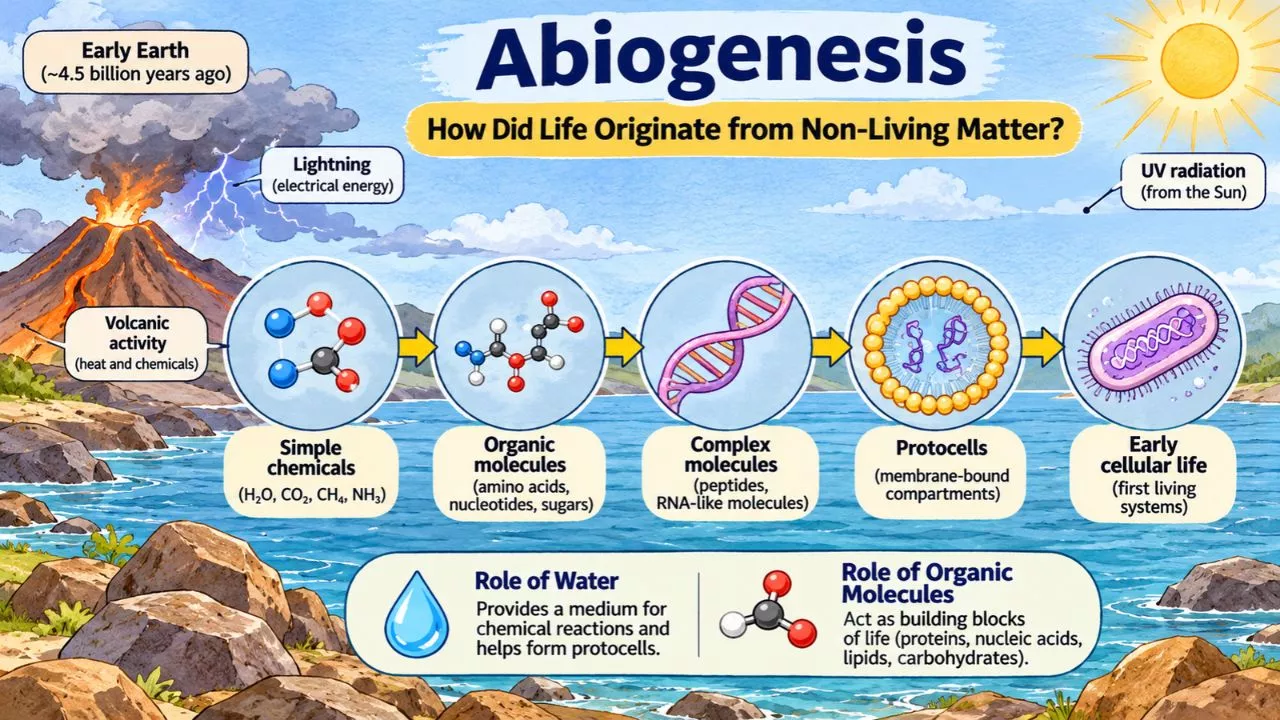
Abiogenesis: How Did Life Originate from Non-Living Matter?
One of biology’s biggest questions is how the first living systems emerged on a planet that initially had no life. Abiogenesis is the scientific study …
One of biology’s biggest questions is how the first living systems emerged on a planet that initially had no life. Abiogenesis is the scientific study …
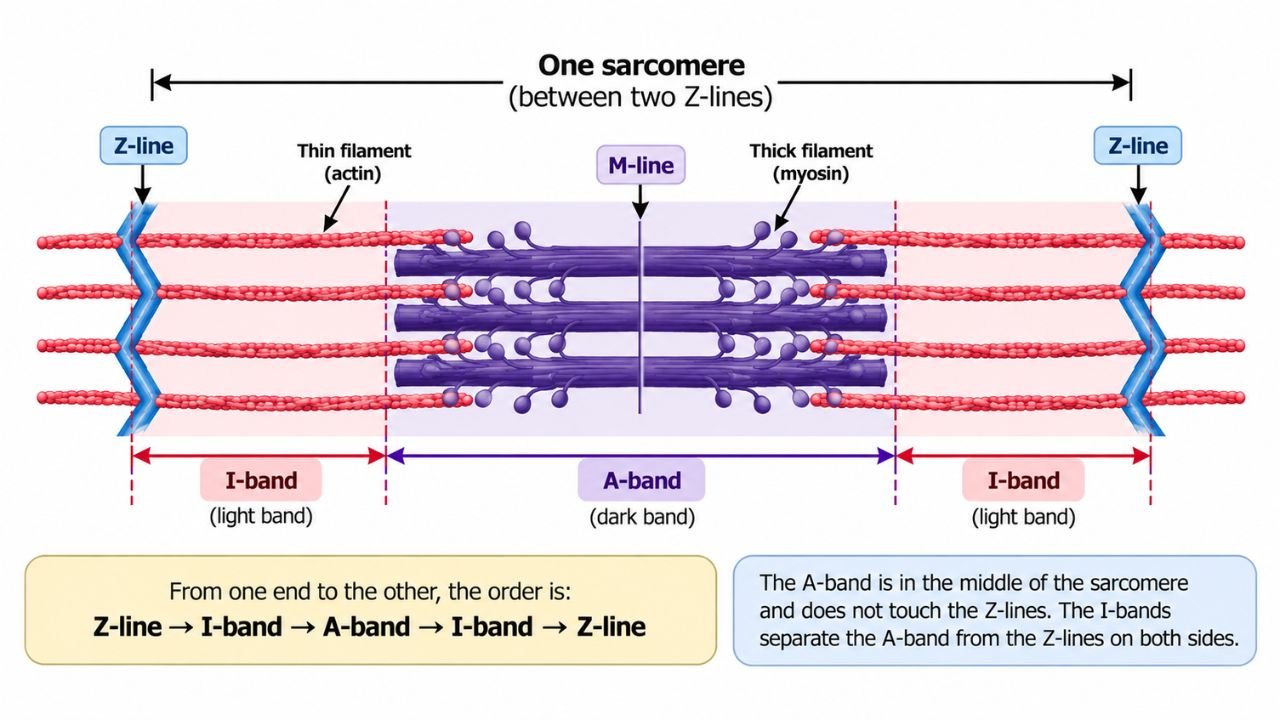
The A-band is the dark region of a sarcomere that spans the full length of the thick myosin filaments. It also includes the areas where …
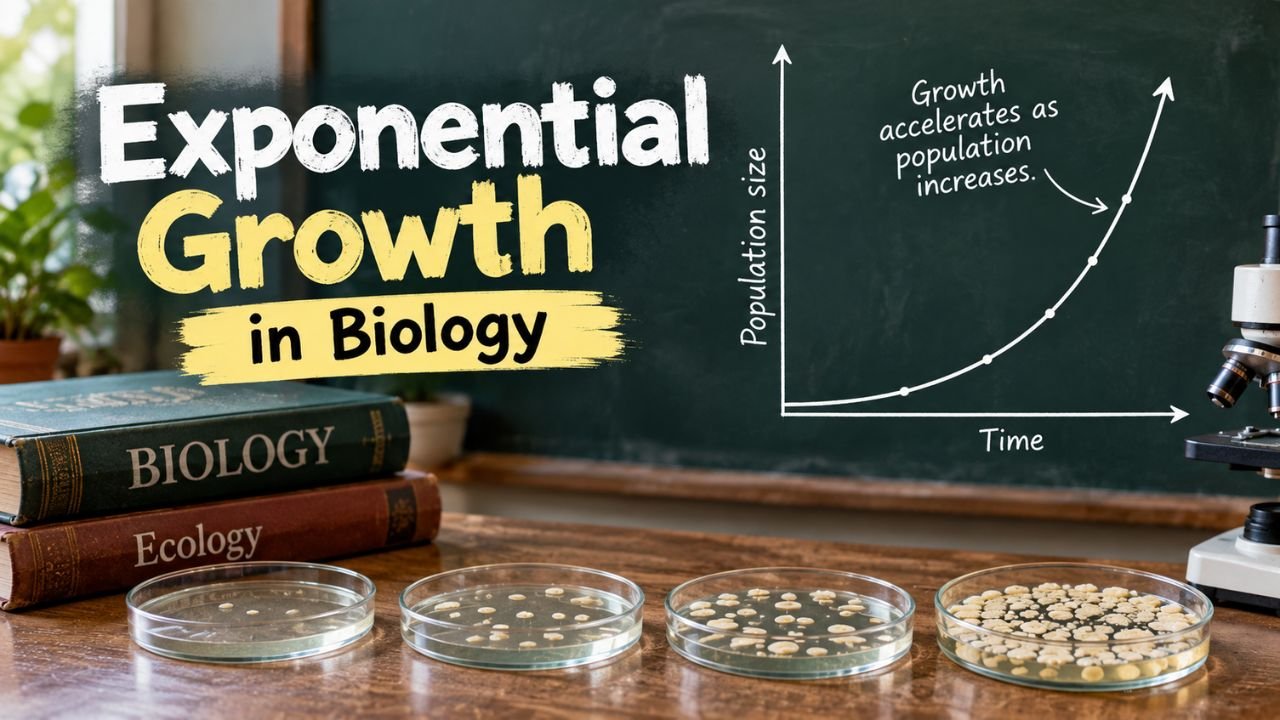
Exponential growth in biology is the rapid increase in a population when every individual has enough food, space, and other resources to survive and reproduce. …
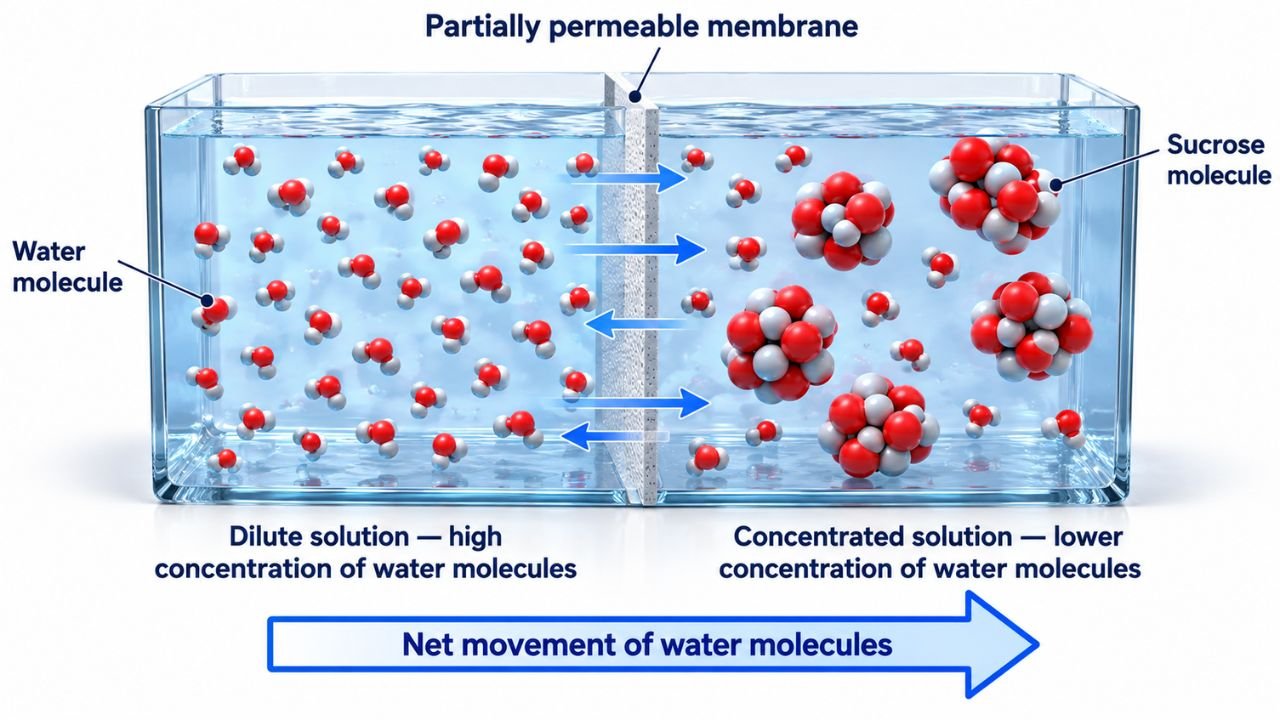
Osmosis is the net movement of water across a selectively permeable membrane from an area of higher water potential to an area of lower water …
Biology is an utterly interesting field of science that has been the centre of focus for centuries. The complex biological concepts have been nagging one …
One of the most important steps in molecular biology, especially molecular genetics and analysis, is the isolation of DNA from the human genome and make …
Definition of Rhizome A rhizome is a subsurface modification of a plant stem which is capable of producing roots and shoots from underground. Rhizomes are …
Definition Osteichthyes is a class of fish that consist of all the bony fish. These fishes are composed of bony endoskeleton and hence the name …
In the last 150 years, humanity has advanced significantly in terms of technology. Not only the technology has become more efficient in terms of performance, …
Taproots are one of the three major types of root systems found in plants; the other two are adventitious root system and fibrous root system. …
Biofuels may be solid, liquid or gaseous in nature. NEED FOR BIOFUELS Fossil fuels like coal and petroleum are the most common sources of energy. …
As we all know that every organ, tissue and cell of our body has been allotted a specific role that unites our whole body as …