What is Deforestation?
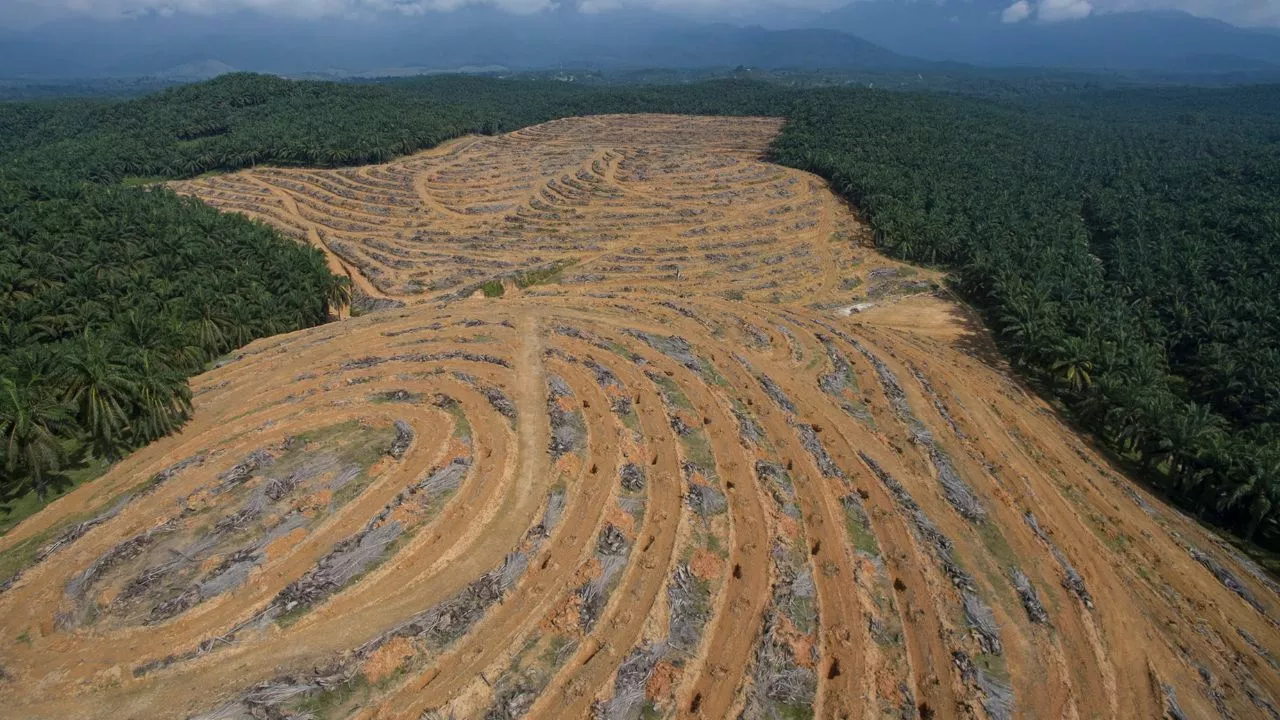
Deforestation is the purposeful clearing of forested land. Throughout history and into modern times, forests have been razed to make space for agriculture and animal grazing, and to obtain wood for fuel, manufacturing, and construction.
Deforestation has greatly altered landscapes around the world. About 2,000 years ago, 80 percent of Western Europe was forested; today the figure is 34 percent.
In North America, about half of the forests in the eastern part of the continent were cut down from the 1600s to the 1870s for timber and agriculture.
China has lost great expanses of its forests over the past 4,000 years and now just over 20 percent of it is forested. Much of Earth’s farmland was once forests.
Deforestation can result in more carbon dioxide being released into the atmosphere. That is because trees take in carbon dioxide from the air for photosynthesis, and carbon is locked chemically in their wood.
When trees are burned, this carbon returns to the atmosphere as carbon dioxide. With fewer trees around to take in the carbon dioxide, this greenhouse gas accumulates in the atmosphere and accelerates global warming.
Deforestation also threatens the world’s biodiversity. Tropical forests are home to great numbers of animal and plant species. When forests are logged or burned, it can drive many of those species into extinction. Some scientists say we are already in the midst of a mass-extinction episode.
More immediately, the loss of trees from a forest can leave soil more prone to erosion. This causes the remaining plants to become more vulnerable to fire as the forest shifts from being a closed, moist environment to an open, dry one.
While deforestation can be permanent, this is not always the case. In North America, for example, forests in many areas are returning thanks to conservation efforts.
Primary Causes of Deforestation
1. Agricultural causes of deforestation.
Agriculture is the leading cause of deforestation worldwide, and because forests compete for space with farmland and ranchland, the two are closely intertwined.
As global populations grow, increasing demand for food and resources drives the clearing of more forestland for crops and livestock, with agricultural expansion often occurring on a massive scale in regions such as Southeast Asia, Central Africa, and South America.
Commercial farming
Commercial agriculture crops like soy, palm oil, cocoa, and coffee are grown mainly for export. Meeting the demand for these major global commodities often involves replacing natural forests with large-scale plantations, resulting in significant biodiversity loss.
In Brazil, soy farms stretch to the horizon where Amazon rainforest and Cerrado savanna once stood. In Indonesia and Malaysia, palm oil plantations have replaced rich tropical habitats.
Certain practices within commercial farming are especially damaging to forests and play a major role in driving deforestation:
Clearcutting and industrial agriculture:
Large-scale agriculture often begins with clearcutting, the complete removal of all trees in an area. Mechanized farming using bulldozers, harvesters, and other heavy equipment can turn dense forest into cropland in days, enabling rapid expansion but also causing severe, long-term environmental impacts.
Intensive crop cultivation:
Modern agricultural practices are designed to produce high yields, but they require large, open fields. To achieve this, trees are cut down, soils are plowed, and irrigation systems are installed. While these methods can be efficient in the short term, they often degrade the land, making it harder for forests to regrow in the future.
Monoculture:
Industrial plantations for palm oil, rubber, or timber often replace biodiverse forests with single-species crops (monoculture). This transformation not only destroys habitats for animal species but also makes the land more vulnerable to pests, disease, and climate impacts, further reducing its ecological value.
Commercial ranching
Cattle ranching is one of the main causes of deforestation. As incomes rise around the world, a growing number of people can afford beef and are adding meat to their diets. This increases demand for pastureland, which in turn drives further deforestation, especially in regions that export beef, like Latin America.
In Brazil, for example, vast areas of the Amazon rainforest have been cleared to make way for pasture and livestock grazing. Once the grassland becomes overgrazed and unproductive, ranchers often abandon it and clear more forest to start again.
Subsistence farming
In many lower-income regions, families practice small-scale farming to feed themselves and sell any surplus locally. While each plot is small, the combined effect of thousands of such farms can be significant, especially if not enough time is allowed for the land to rest and regenerate between growing seasons.
2. Deforestation caused by logging and wood harvesting.
If agriculture is the main driver of deforestation, logging is its closest partner. Even when trees are not removed to make way for farms, they are often cut down for their wood. The demand for timber is immense, stretching from local construction projects to the global trade in paper and furniture.
Logging can be carried out sustainably, but when it isn’t, the damage is extensive. In tropical regions, high-value hardwoods like mahogany or teak are targeted first, with loggers cutting deep roads into previously untouched areas. Once these routes exist, they invite further human activity, from farming to hunting, setting the stage for permanent deforestation.
Over-exploitation of wood resources
Trees are a renewable resource, but only if harvested at a rate the forest can replace. Over-exploitation strips away the forest’s ability to regenerate, leading to soil erosion, reduced rainfall, and habitat loss.
Paper production
Pulp and paper industries are another major consumer of wood. The paper in books, packaging, and disposable products often comes from plantations grown on cleared forestland or from direct logging of natural forests.
Recycling can reduce demand for virgin pulp, but in many countries, recycling systems are not yet robust enough to make a major dent in deforestation.
Charcoal production
Charcoal production is a major driver of deforestation, especially in regions like sub-Saharan Africa where it serves as a key fuel for cooking and heating.
Because charcoal requires large amounts of wood, its production can lead to extensive tree cutting and contribute to deforestation if sustainable forestry practices are not in place.
Wood is converted into charcoal by heating it in a low-oxygen environment, like pits, kilns, or ovens, which removes water and volatile compounds, leaving mostly carbon behind. The resulting charcoal is a lightweight, carbon-rich fuel that burns hotter and cleaner than raw wood.
3. Deforestation caused by infrastructure and urbanization
The steady spread of towns, roads, and industry is another major force behind deforestation, as growing populations and expanding economies drive demand for land to house people and support industries and consumer services.
Cities, while serving as hubs of economic activity, also require space for housing, businesses, and services, and as they grow, they often expand into nearby forests.
Urban sprawl contributes to forest clearance
Urban sprawl occurs when cities grow outward rather than upward. Low-density neighborhoods consume large tracts of land, pushing into forests and fragmenting ecosystems.
This not only reduces forest cover but also makes it harder for wildlife to survive in the patches that remain.
Road-building lead to increased deforestation
Once a road is in place, it provides access to areas that were previously too remote to exploit. Farmers, loggers, and miners can move in, and what begins as a narrow track can quickly turn into a deforested corridor.
Road-building and development are often seen as symbols of progress, connecting communities and boosting trade. Yet in forested regions, road construction opens the door to deforestation.
Expansion of manufacturing and industrial sites
As economies industrialize, factories and processing plants often spring up near resource-rich forests. These facilities require cleared land, and their presence can attract further development in surrounding areas.
infrastructure funding aid deforestation
When governments or international banks fund large infrastructure projects like highways, railways, or ports without strict environmental safeguards, forest loss is often an unintended consequence.
4. Deforestation caused by mining activities
Mining also causes deforestation, as extracting minerals requires clearing large areas of forest to access deposits and build supporting infrastructure.
Mineral extraction for resources such as gold, bauxite, and rare earth elements often begins with road construction and site preparation, which immediately disturb ecosystems and open remote forests to further exploitation.
Once extraction starts, vegetation is removed, soil is stripped away, and waterways can become polluted, making it difficult for forests to recover.
over-exploitation of natural resources impact deforestation
Over-exploitation of natural resources in mining regions compounds the problem. When extraction is not carefully managed, forests are stripped of timber and other resources in addition to the minerals being mined.
This overuse depletes ecosystems, erodes biodiversity, and can leave landscapes so degraded that they are unable to regenerate, locking in deforestation for decades or even centuries.
5. Natural causes of deforestation
While human activity is the primary driver of deforestation, natural factors—often intensified by human influence—also contribute to forest loss. In many cases, these pressures interact, creating feedback loops that accelerate damage.
Climate change
Forests are sensitive to shifts in temperature and rainfall. As the planet warms, many regions are experiencing longer dry seasons, more intense storms, and unpredictable weather patterns.
These changes weaken trees, making them more susceptible to pests, diseases, and fire. In tropical rainforests, even small changes in rainfall can have big effects, slowing growth and altering the mix of species that survive.
Wildfires
Fire is a natural part of some forest ecosystems, but in many tropical regions, where deforestation is most prevalent, it rarely occurs without human interference.
Land clearing with fire has introduced more frequent and intense burning. When coupled with hotter, drier conditions caused by climate change, fires can spread farther, burn longer, and destroy trees that might otherwise have survived.
6. Cultural and social causes of deforestation
Deforestation often happens not just because of economic reasons, but also because of cultural and social practices tied to how people live and use land.
Traditional agricultural practices: slash-and-burn
One common traditional method is called slash-and-burn agriculture. In this practice, people cut down trees and burn the brush to clear land for farming. This method has been used for centuries by many indigenous and rural communities because it temporarily makes soil fertile for growing crops.
However, slash-and-burn causes deforestation because the trees and plants are removed completely. After a few years, the soil loses nutrients and farmers must clear new forest areas to continue farming, leading to ongoing forest loss.
While this method can be sustainable if done on a small scale with long rest periods, growing population pressure often shortens those rest periods, causing more permanent forest clearing.
Cultural attitudes toward land use and clearing
In some cultures, clearing land is seen as a way to show ownership and control over the land. It’s a visible sign that someone is using the land productively. Clearing forests can also be linked to progress and development it’s how people make a living and provide for their families.
This mindset can encourage deforestation because people may feel pressure to clear more forest to prove their livelihood or status, especially when land rights are unclear or competition for resources is high.
Deforestation as a status or survival strategy
In some areas, clearing large areas of forest can become a status symbol. Owning or farming bigger land plots, which often involves clearing forest, may raise a person’s social standing.
At the same time, for many rural families, deforestation is a survival strategy. Clearing forest land allows them to grow food, raise animals, or harvest valuable wood products. Without alternative jobs or sources of income, people rely on clearing forests to support themselves and their communities.
7. Role of energy and industry in deforestation
Energy and industry play significant roles in deforestation, particularly through biomass energy production and broader energy development.
Biomass energy production
In many regions, especially rural and developing areas, wood and other plant materials are harvested from forests to be used as fuel for cooking, heating, and electricity generation.
This reliance on biomass energy often leads to overharvesting of trees and vegetation, reducing forest cover and disrupting ecosystems. When demand for biomass exceeds the forest’s natural regeneration capacity, it directly contributes to deforestation.
Energy development
Large-scale energy projects such as building hydroelectric dams, oil and gas extraction, mining for fossil fuels, and expanding infrastructure for electricity frequently require clearing large forest areas.
Roads, power lines, and facilities open previously inaccessible forest regions to logging, agriculture, and settlement, accelerating deforestation. Additionally, energy development can cause pollution and habitat destruction, further impacting forest health.
8. Deforestation caused by illegal or indirect activities
Deforestation is often driven not just by legal industries but also by hidden, illegal, or indirect activities that quietly strip away forests.
Illegal wildlife trade impact deforestation
Hunters, poachers, and traffickers often cut trails or small roads deep into forests to reach wildlife-rich areas. These access routes fragment habitats and open the door for logging, farming, or settlement to follow.
In some cases, traffickers clear patches of forest to set traps, build camps, or store captured animals.
Wildlife trafficking can also lead to broader forest loss by weakening ecosystems. Removing key species—such as seed-dispersing birds, primates, or large mammals—can disrupt forest regeneration, making it harder for the ecosystem to recover from other disturbances.
land grabbing affected deforestation
Land grabbing is when individuals, companies, or governments seize large areas of land—often in rural or forested regions—without proper permission, fair compensation, or respect for the rights of local communities.
Land grabbing can happen through outright illegal occupation, but sometimes it is done through shady legal loopholes or corrupt deals. In many cases, the land is cleared for large-scale agriculture (like palm oil, soy, or cattle), mining, or infrastructure projects. This often leads to deforestation, displacement of Indigenous people, and loss of livelihoods for small farmers.
corruption facilitate illegal land clearing
Corruption undermines forest protection by allowing powerful interests to bypass environmental rules. Bribes, forged permits, and backroom deals can enable companies to clear protected areas or obtain land illegally. These practices not only fuel deforestation but also weaken public trust in government institutions and make it harder to implement genuine conservation efforts.
Effects of Deforestation
Effects of Deforestation on the Environment
Loss of Habitat
One of the most dangerous and unsettling effects of deforestation is the loss of animal and plant species due to their loss of habitat. 70% of land animals and plant species live in forests. Not only does deforestation threaten species known to us, but also those unknown.
The trees of the rainforest that provide shelter for some species also provide the canopy that regulates the temperature. Deforestation results in a more drastic temperature variation from day to night, much like a desert, which could prove fatal for many inhabitants.
Increased Greenhouse Gases
In addition to the loss of habitat, the lack of trees also allows a greater amount of greenhouse gases to be released into the atmosphere. Healthy forests absorb carbon dioxide from the atmosphere, acting as valuable carbon sinks. Deforested areas lose that ability and release more carbon.
Water in the Atmosphere
Trees also help to control the level of water in the atmosphere by helping to regulate the water cycle.
One of the most important forests for regulating water cycles across the planet is the Amazon rainforest. Its millions of trees work together to release moisture into the air, creating atmospheric “rivers” that regulate Earth’s weather patterns.
In deforested areas, there is less water in the air to be returned to the soil. This then causes dryer soil and the inability to grow crops.
Soil Erosion and Flooding
Further effects of deforestation include soil erosion and coastal flooding. Trees help the land to retain water and topsoil, which provides the rich nutrients to sustain additional forest life.
Without forests, the soil erodes and washes away, causing farmers to move on and perpetuate the cycle. The barren land which is left behind in the wake of these unsustainable agricultural practices is then more susceptible to flooding, specifically in coastal regions.
Effects of Deforestation on Indigenous People
As large amounts of forests are cleared away, allowing exposed land to deteriorate and the habitats of innumerable species to be destroyed, the Indigenous communities who live there and depend on the forest to sustain their way of life are also under threat.
The loss of forests has an immediate and direct effect on their lifestyle. Many Indigenous communities depend on what the forest has to offer for food, medicine, building materials, and cultural resources.
Because many of these communities are located in remote areas in dense forests, the loss of these resources poses many challenges to their health and wellbeing.
Deforestation has human rights implications, particularly for the many Indigenous groups who are frontline communities.
Often, frontline communities have little say in how their local environment is altered by governments and corporations. At the same time, these communities face the most immediate and threatening impacts of environmental degradation and climate change.
Solutions to Deforestation
1. Government Regulations
The best solution to deforestation is to curb the felling of trees by enforcing a series of rules and laws to govern it. Deforestation in the current scenario may have reduced; however, it would be too early to assume.
The money-churner nature of forest resources can be tempting enough for deforestation to continue.
2. Banning Clear-Cutting of Forests
This will curb the total depletion of the forest cover. It is a practical solution and is very feasible.
3. Reforestation and Afforestation
Land skinned of its tree cover for urban settlements should be urged to plant trees in the vicinity and replace the cut trees. Also, the cutting must be replaced by planting young trees to replace the older ones that were cut.
Trees are being planted under several initiatives every year, but they still don’t match the numbers of the ones we’ve already lost.
4. Reduce Consumption of Paper
Your daily consumption of paper includes printing paper, notebooks, napkins, toilet paper, etc. Try to reduce consumption, reduce waste of paper and also opt for recycled paper products.
Make life simple such as printing/writing on both sides of the paper, using less toilet paper, avoiding paper plates, and napkins and wherever possible, go paperless.
5. Educate Others
Still, many are entirely unaware of the global warming problem we’re facing. Educate your friends, family, and community by sharing the deforestation facts, and its causes and effects. You can make an impact!
6. Eat Less Meat
Livestock rearing has become one of the leading causes of deforestation. Try to eat less meat. It may be hard for some people to try. However, eating less meat, even just for one meal a day, will also make an extreme impact on the environment.
7. Purchase from Sustainable, Forest-Friendly Companies
Try to purchase from companies that are committed to reducing deforestation. Asian Pulp and Paper, Disney, L’Oreal, Hershey, Unilever, Willmar International are deforestation-free.
8. Reduce Consumption of Deforestation Prone Products
Palm oil is a common ingredient in absolutely everything we see around us. Make it a simple habit to get a quick peek at the ingredients. Soybeans are another deforestation hotspot.
Try finding ways to reduce consumption or opting for organic, local soy products and, if possible, avoid it completely.